Reviewed by Dr. Doug Heller
|
Reading time: three minutes
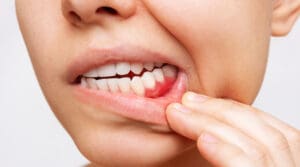
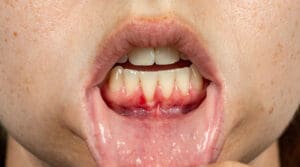
Exposed tooth roots, thin gum tissue, and progressively receding gums are three important signs that you may need gum grafting. A gum graft can protect vulnerable roots, strengthen the tissue supporting your teeth, and help prevent further recession.
Table of Contents
Why Is Gum Grafting Important?
Gum grafting helps protect exposed tooth roots, strengthen thin gum tissue, and slow further gum recession. By restoring or reinforcing the tissue around a tooth, grafting can improve gum stability, reduce the risk of additional tissue loss, and help protect the underlying bone and supporting structures.
Early treatment is especially important when recession is progressing, as continued loss of gum and bone support can affect the long-term health and stability of your natural teeth.
Grafting may be recommended when:
- Your gums continue to recede, exposing more of the tooth’s root.
- You experience persistent tooth sensitivity despite treatment.
- Tenderness around the gumline makes brushing uncomfortable.
- The gum tissue around a tooth is thin and may need additional support.
- Your teeth appear longer or your gumline looks uneven.
- Your gums have receded following orthodontic treatment.
- You need thicker gum tissue around dental implants to help maintain their long-term health and stability.
How We Evaluate Gum Recession
Dr. Deborah Ruprecht draws on decades of periodontal experience to evaluate your gum recession. During your exam at Life Oral Health, she checks how much tissue has been lost, measures periodontal pockets, and assesses the surrounding gums and bone. Previous records, when available, help show what has changed.
Your brushing habits, tooth position, medical history, and planned dental treatment can also help explain what may be contributing to the recession.
Dr. Ruprecht will explain whether grafting would help and what you can expect it to achieve, such as covering an exposed root or adding thickness to thin gums.
When Gum Recession Does Not Require Surgery
Not every area of gum recession requires a graft. When the tissue is healthy, sufficiently thick, and the recession is stable, monitoring and preventive care may be appropriate.
Gentler brushing techniques, professional cleanings, and regular periodontal evaluations can help protect the remaining tissue. Sensitivity toothpaste or in-office treatments can also provide relief, although these measures cannot restore lost gum tissue.
If gum disease is contributing to the recession, controlling the infection and inflammation is the first priority. Once the disease is stable, we can determine whether grafting is needed to protect the affected teeth.
Gum Grafting at Life Oral Health
Dr. Ruprecht has advanced experience in many grafting techniques and will help you decide which grafting method is right for you. We offer gum grafting using your own tissue or donor tissue, depending on your needs. When appropriate, we use minimally invasive tunneling techniques to limit disruption of gum tissue between the teeth.
We also routinely include platelet-rich fibrin (PRF), prepared from your own blood, to accelerate healing. Our goal is to preserve healthy tissue and protect your natural teeth.
FAQ
Can gum recession get worse even if I have no sensitivity?
Yes. Gum recession can progress without causing pain or sensitivity. The absence of symptoms does not necessarily mean the tissue is healthy or stable. Regular periodontal examinations help identify changes in the gumline before more extensive tissue loss occurs.
Does a gum graft require tissue from the roof of my mouth?
Not always. Donor tissue may be suitable, avoiding a second surgical site. Dr. Ruprecht will discuss the available options and why she recommends a particular material.
Can a gum graft treat just one tooth?
Yes. A graft can treat a single tooth or several teeth. We assess each area individually to determine which sites would benefit from treatment.
Talk With a Periodontist About Receding Gums
If you have noticed changes in your gumline or are concerned about worsening recession, our team at Life Oral Health Periodontics and Implant Surgery can help. Led by Dr. Ruprecht, we focus on preserving your natural teeth through conservative, personalized care. We will assess your gum health and help you understand whether gum grafting or a nonsurgical approach is appropriate.
To schedule an appointment at our periodontal office in Newport Beach, CA, please call (949) 833-2263 or visit us at 2372 SE Bristol St Suite A, Newport Beach, CA 92660.