Reviewed by Dr. Doug Heller
|
Reading time: three minutes
Gum recession is a common dental condition where gum tissue pulls back from the gum line. As more of the tooth roots become exposed, the risk of tooth sensitivity, root decay, and periodontal disease increases.
Table of Contents
What Causes Gum Recession?
Gum recession develops from repeated trauma to the gum tissue or inflammation caused by plaque bacteria and tartar buildup. Sometimes, both play a role.
Common contributors include:
- Brushing trauma: Hard-bristled brushes, scrubbing, or too much pressure can irritate and wear down gum tissue.
- Gum disease: Plaque and tartar at the gum line can inflame the gums and contribute to periodontal disease and bone loss.
- Tobacco use: Smoking or chewing tobacco can worsen gum health.
- Teeth clenching: Bruxism adds excess force that can contribute to recession.
- Tooth Position in the mouth
- Orthodontic treatment: Braces can make plaque and tartar buildup harder to control, and ongoing inflammation can contribute to gingival recession.
What Are the Signs of Gum Recession?
Symptoms can be easy to miss at first. These are common signs to watch for:
- Tooth sensitivity, especially to cold, heat, or brushing
- Teeth that look longer than before
- A visible change in the gum line or uneven gum tissue
- Bleeding with brushing or flossing
- Bad breath related to dental plaque and bacteria buildup
- Gum tenderness, swelling, or redness
- Loose or shifting teeth
- Bite changes in more advanced cases with bone loss
How Is Gum Recession Diagnosed?
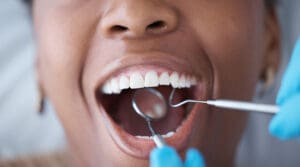
A periodontal exam can help identify the cause of recession and check for signs of periodontal disease.
Evaluation may include visual assessment and measurements with a periodontal probe to check:
- The amount of recession and exposed roots
- Gum pocket depth and bleeding
- Plaque buildup and tartar buildup under the gum line
- Signs of bone loss around tooth roots
This information helps guide treatment planning and determine whether prevention alone is appropriate or whether periodontal therapy is needed.
Treatment Options for Receding Gums
Treatment depends on the cause, the location of recession, and whether inflammation or bone loss is present.
Gum Grafting and Root Coverage
When recession exposes tooth roots, gum grafting can add stronger gum tissue and help protect the root surface.
For some patients, the focus is to strengthen the gum line and help keep the recession from progressing. This is done by placing a tissue graft below the affected area.
For others, the goal is root coverage to rebuild missing gum tissue over the exposed root. A connective tissue graft or another soft tissue graft may be recommended. The goal is a healthier, more stable gum line and less sensitivity and decay risk.
Deep Cleaning for Gum Disease
If plaque bacteria and tartar buildup are present below the gum line, non-surgical periodontal therapy may be recommended. Scaling and root planing removes deposits from around tooth roots and helps reduce inflammation.
Protect Your Gum Health With a Periodontal Exam
At Periodontal Associates, we provide conservative, long-lasting periodontal care. Schedule a consultation for a periodontal exam to evaluate gum recession and review your treatment options.
To book an appointment at our Aurora location, call (303) 755-4500. To book an appointment at our Centennial location, call (303) 795-5700.
FAQs
Can gum recession be reversed?
Gum recession cannot be reversed. Once gum tissue recedes, it does not grow back.
How can you stop receding gums from getting worse?
Use a soft-bristled toothbrush, brush gently along the gum line, and clean between teeth daily to reduce plaque buildup. If gum disease is present, scaling and root planing or other periodontal therapy may be needed to control inflammation and bacteria buildup.
What do receding gums look like?
Receding gums look like gum tissue that has pulled away from the tooth, leaving part of the root visible. The gum line sits lower on the tooth than it should.
Can flossing cause gum recession?
Flossing does not typically cause recession when done correctly. Aggressive snapping or improper technique can irritate gum tissue, but daily flossing helps reduce dental plaque and supports gum health.
Where can I get gum recession treatment near me?
If you are looking for gum recession treatment near you in the Denver metro area, Periodontal Associates provides periodontal evaluation, deep cleaning therapy, and gum grafting to improve the recession when indicated. Call (303) 755-4500 in Aurora or call (303) 795-5700 in Centennial.